
Geographic Regions
Choose a region below to view countries in that region. Regions are grouped by ITU classification.
Browse all Countries
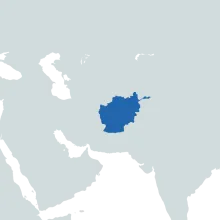
Afghanistan's telecommunications landscape grapples with unique challenges and innovative solutions, largely due to its rugged geographical features and dispersed population distribution. Vast mountainous terrains and desert expanses make traditional wired networks impractical, thereby necessitating the adoption of alternative infrastructure solutions. Extensive mobile telecommunication networks ...

Albania, a Southeastern European country with mountainous terrain and large rural populations, presents unique challenges in the telecommunications sphere. The country's geographical layout, with its highly dispersed population and difficult terrains, poses substantial obstacles to developing an encompassing and efficient telecommunications network. However, significant strides have been made in ...
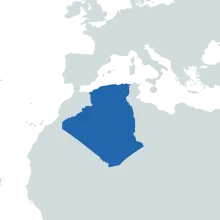
Algeria's telecommunications landscape presents unique challenges due to the country's extensive geographical diversity and uneven population distribution. The vast Sahara Desert, which covers some 90% of the nation, alongside its rugged Atlas mountain ranges, pose significant difficulties to infrastructure development. Nonetheless, Algeria has been proactive in overcoming these obstacles ...

The telecommunications landscape in American Samoa is characterised by unique geographical challenges and innovative solutions. As a remote island territory in the South Pacific, the archipelago experiences logistical hurdles in implementing standard telecommunication infrastructure, compounded by a widely dispersed population across its various islands. The country has adopted innovative ...

Andorra, a small mountainous nation located between France and Spain, covers an area of just 468 square kilometres. Despite a population of roughly 80,000 people and significant geographical challenges due to its topography, Andorra has developed a robust telecommunications infrastructure. Andorra Telecom, the sole operator, has mitigated these difficulties by maximising fibre optic networks to ...
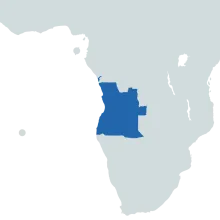
Angola's telecommunications landscape presents unique challenges due to its substantial geographical expanse and uneven population distribution, with concentrated urban centres and large, sparsely populated rural regions. The country is focusing robustly on enhancing its infrastructure, with significant investment in submarine cables and satellite systems, fostering a unique solution to the ...

Anguilla, a British overseas territory in the Caribbean, despite its geographical challenges and small population, has a robust telecommunications sector with widespread coverage of both mobile and broadband services. The island's hilly terrain and scattered population have necessitated innovative solutions, including the strategic placement of telecoms infrastructure to maximise coverage. However ...

Telecommunications in Antarctica face unique challenges due to the extreme geography and climate conditions. The harsh, isolated environment, coupled with an atypical population distribution — primarily comprised of shifting groups of scientists and researchers — greatly complicates conventional communication infrastructure systems. Due to these factors, satellite communication is the main ...

Antigua and Barbuda's telecommunications landscape presents both unique challenges and solutions due to its geographical composition and population distribution. Being a two-island nation in the Caribbean, it faces geographical challenges, particularly in providing consistent telecommunications coverage across both islands. The population, although small, is dispersed across the two islands, with ...
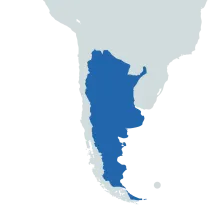
Stretching over approximately 2.8 million square kilometres, including vast plateaus, densely populated cities, and even remote areas in Andean mountains and Patagonian steppe, Argentina's terrain presents a significant geographical challenge to the establishment of telecommunications networks. However, despite the population being largely concentrated in urban areas like Buenos Aires, innovative ...

Armenia's telecommunications landscape, despite the country's complex topography and population distribution, has demonstrated remarkable growth and resilience. With a populace primarily concentrated in the capital, Yerevan, and challenging geographical features such as the arid Ararat Valley and rugged highlands, the implementation of a sturdy telecommunications network has been a significant ...

Aruba is a small island in the Caribbean and a constituent country of the Netherlands. Despite being just over 30 kilometres in length, its telecommunications infrastructure caters for a population of over 105,000 residents and a booming tourism industry. The island's flat terrain and tiny size have enabled complete mobile network coverage, with innovative solutions, like underwater cables to ...
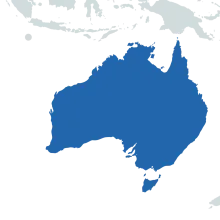
Australia's technology landscape is shaped by its unique geographical spread and population distribution. Its expansive landmass—second only to Russia among countries without land borders—presents significant challenges for telecommunications infrastructure. Most of the population clusters along the eastern seaboard, leaving vast rural and regional areas sparsely populated. This has compelled ...

Austria, one of Europe's landlocked countries, has navigated a mix of physical and demographic obstacles to develop a robust technology scene. With a population scattered across urban centres and mountainous regions, the nation has overcome geographical challenges to deliver widespread mobile and broadband coverage. Alpine terrain and rural expanses have pushed Austria to innovate, leading to a ...

Azerbaijan, located between Eastern Europe and Western Asia, presents unique challenges in its technology landscape. The terrain ranges from the flat, arid Kur-Araz Lowland to the towering, rugged peaks of the Greater Caucasus mountains. These geographical disparities, coupled with uneven population distribution, add complexity to telecommunications infrastructure. Most of the population is ...